

Keller Easterling, Matrix Space in Fall Semester: Mark Twain, once a steamboat captain on the Mississippi, developed techniques for navigating the river. While the passengers saw “pretty pictures” of landscape scenes, he was extracting information from the changing “face of the water.” A little ripple, eddy or “faint dimple” signaled turbulence or obstacles in a complex and potentially dangerous organization below the surface. These were markers of unfolding potentials or inherent agency in the river—what can only be called its disposition. Disposition is the character or propensity of an organization that results from all its activity. It is the medium, not the message. Its not only the pattern printed on the fabric but the way the fabric floats. It is not the shape of the game piece but the way the game piece plays. It is not the text but the constantly updating software that manages the text. It is not the object form but the active form.
*
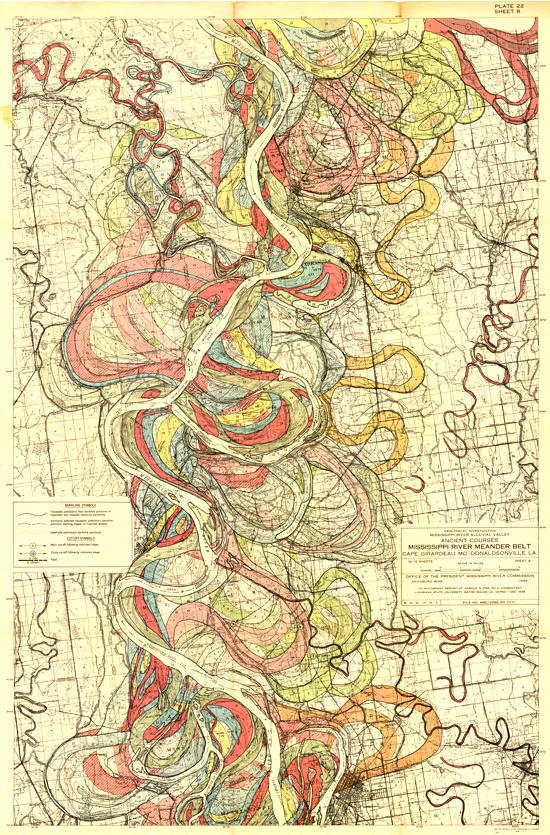
Mississippi River, Harold Fisk, 1944
*








No comments